GetResponse puts email, automations, landing pages, and a website builder into one dashboard starting at $19 a month. The real question is whether the tools are worth the price jump when your list starts growing.
The Short Version
- Drag-and-drop automation builder lets you map out full email sequences on a visual canvas, but only the $59/mo Marketer plan gives you unlimited workflows.
- 89 out of 100 on independent inbox delivery tests, with SPF and DKIM baked into every account.
- Starter at $19/mo gives you unlimited sends and a landing page builder, but caps you at just 1 custom automation.
Jump to Section
What GetResponse Actually Gives You at Each Price
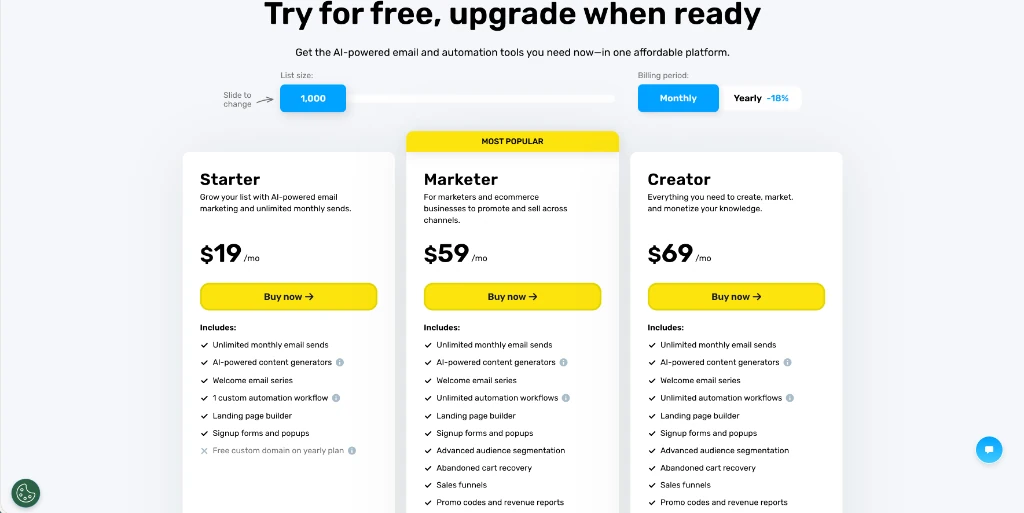
Three paid tiers sit above a free 30-day trial. GetResponse retired its old 500-contact free plan for new signups, so you can test all paid tools for thirty days before picking an entry tier. If you’re on an older account, the GetResponse free plan freezes new leads after five hundred names.
Here’s how each paid plan breaks down at the 1,000-contact level:
| Feature | Starter ($19/mo) | Marketer ($59/mo) | Creator ($69/mo) |
|---|---|---|---|
| Monthly Email Sends | Unlimited | Unlimited | Unlimited |
| Custom Automation Workflows | 1 | Unlimited | Unlimited |
| Landing Pages | Yes | Yes | Yes |
| Advanced Segmentation | No | Yes | Yes |
| Abandoned Cart Recovery | No | Yes | Yes |
| Sales Funnels | No | Yes | Yes |
| Webinars & Courses | No | No | Yes |
| 24/7 Live Chat Support | Yes | Yes | Yes |
Annual billing saves about 18%, which drops Starter closer to $15.50 a month. That’s a fair deal for a tool with unlimited sends. But sticker shock hits when you outgrow that single workflow. Moving from $19 to $59 triples your bill overnight, and there’s no mid-tier pick in between.
Subscriber list jumps can catch you off guard if you pay for a full year upfront. You should know how GetResponse pricing scales at 2,500 and 5,000 contacts before locking into an annual plan.
You don’t need a separate video app like Zoom if you bump up to the Creator plan. The built-in GetResponse webinar room gives you one hundred live seats and tags your attendees on the spot.
Even with those price jumps, GetResponse won’t drain your bank account like Mailchimp does as your list grows. Plug in your list size below to see what you’ll actually save each year:
GetResponse vs Mailchimp Cost Calculator
See how much cash you keep in your bank each year by comparing GetResponse and Mailchimp as your subscriber list grows.
The Automation Builder Is the Real Selling Point
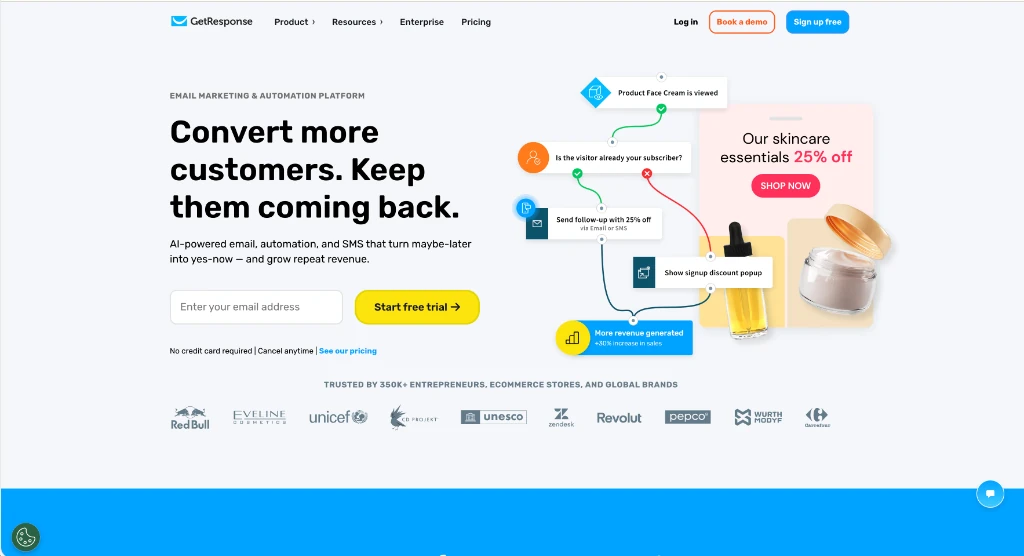
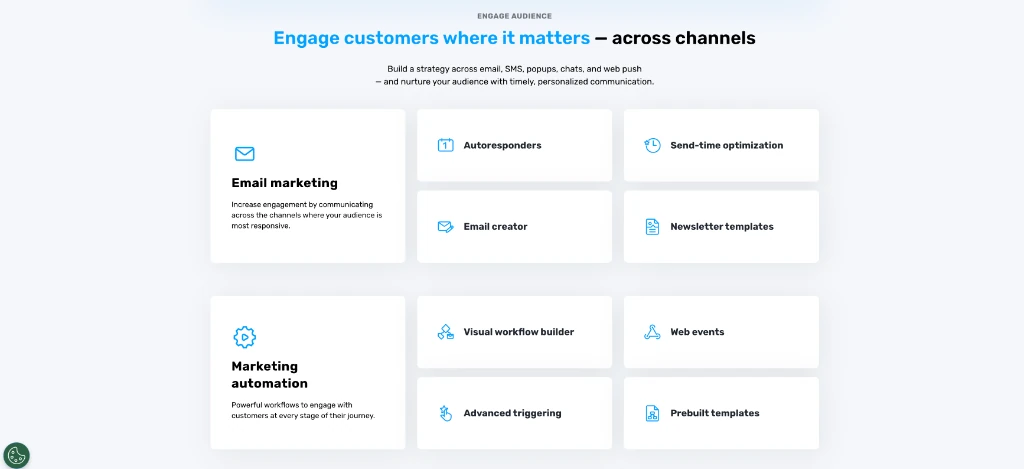
The visual workflow builder is where this tool pulls ahead of basic email senders. You drag triggers, conditions, and actions onto a canvas. Then you link them to map out how your emails fire.
Triggers kick off when someone joins a list, leaves a cart, or hits a set date. Conditions split the path based on opens and clicks. Actions fire the next step, like sending a follow-up, adding a tag, or moving a lead score.
You don’t get locked out of your subscriber flows when you want to branch an offer. I prefer GetResponse over Mailchimp for sales funnels because Mailchimp caps basic accounts at just three triggers.
Ready-made templates cover the most common flows: welcome series, cart recovery, post-purchase follow-ups, and win-back campaigns. Pick a template, swap in your emails, and the workflow goes live in minutes.
You don’t have to lock yourself into stiff drip paths. Setting up GetResponse instead of Constant Contact lets you branch your sales messages. Constant Contact locks basic auto drip rules behind its thirty-five dollar tier.
Web event tracking lets you watch what people do on your site. You can drop a short code snippet on key pages. Then the builder sends a quick follow-up when someone views your checkout.
On top of that, a single workflow can mix email, SMS, and web push alerts. One automation reaches your audience across three channels without building separate campaigns for each.
You don’t need a massive sales CRM just to send a few follow-up emails to your subscribers. I pick GetResponse over ActiveCampaign because ActiveCampaign doubles your monthly bill once your list grows.
GetResponse Review: How Deliverability Actually Stacks Up
An email tool is only worth paying for if your mail hits the inbox. GetResponse scores 89 out of 100 on delivery tests, which sits above the 83% average across most platforms.
GetResponse gives you clear SPF and DKIM records to verify your sending domain in your DNS. It also works with major anti-spam groups that watch sender habits across Gmail, Outlook, and Yahoo.
Your sender reputation score tells Gmail and Outlook whether to drop your mail in the inbox or the junk folder. Keeping your list clean and your open rates high is the biggest thing you can do.
Cheaper plans share IP addresses with other users. That’s normal at this price range. Sending hundreds of thousands of emails per month means the MAX plan and its dedicated IP are a better fit.
Where GetResponse Falls Short
Plan limits on the entry tiers are the biggest hurdle. The Starter tier gives you open sends, but caps you at one automation path. That won’t let you run a welcome email sequence that sells to buyers before needing the $59 Marketer plan.
Order pages and payment funnels are locked behind the Marketer plan, so you can’t sell products directly on the Starter plan. If you stay on Starter, you’ll need an external shopping cart or checkout tool to take customer orders. Even on higher tiers, the native store works best for simple digital downloads rather than running large physical product inventories.
You’ll also spot too many buttons the moment you log in. You’ll have a hard time telling if GetResponse is easy for beginners when basic tools hide behind crowded screens.
List hygiene matters too. If you don’t clean out inactive subscribers on a regular basis, your open rates sink and inbox providers start sending your mail to spam.
Who Should Sign Up (And Who Should Skip It)
GetResponse works well if you want email, funnels, and landing pages in one place. You can test broadcast emails or automated sequences on their 30-day free trial. That gives you plenty of time to build your list before you pay a dime.
Once you need real automation with branching paths, lead scoring, and multi-channel triggers, the Marketer plan at $59 a month covers it all. That is the cost of entry for unlimited workflows. You can start a free trial to test the full dashboard before paying a dime.
Not sure it beats the cheaper options? My breakdown of how GetResponse stacks up against other email platforms shows why the $19 Starter tier is a strong pick when you want unlimited sends and built-in landing pages in one dashboard.
Frequently Asked Questions About GetResponse
Is GetResponse good for beginners?
The drag-and-drop editor and ready-made templates make it simple to get going. Most people send their first email within an hour of signing up.
Does GetResponse offer a free plan?
No. GetResponse discontinued its permanent 500-contact free plan for new accounts. They now offer a full 30-day free trial with access to all paid features instead.
How many automation workflows can I build on the Starter plan?
Just one. Starter at $19/mo gives you a single custom workflow. You’ll need the $59/mo Marketer plan if you want unlimited automations.
Can I export my contacts from GetResponse?
You can. Full list exports come as CSV or XLSX files with all tags, custom fields, and engagement data. Downloads stay live for 7 days.
Does GetResponse support SMS marketing?
SMS is part of the Marketer plan and above. You can add text message steps right inside your automation workflows, so they fire alongside emails and web push alerts.
What is GetResponse’s email deliverability rate?
It scores 89 out of 100 on inbox delivery tests. Every account includes guided SPF and DKIM setup to protect your domain, and the company belongs to major anti-spam groups.
Can I use GetResponse with WordPress?
Absolutely. A free WordPress plugin lets you drop signup forms, pop-ups, and landing pages onto your site with no code.
Does GetResponse have a landing page builder?
Every paid plan comes with a drag-and-drop page builder and mobile-ready templates. You can hook up your own custom domain to it.