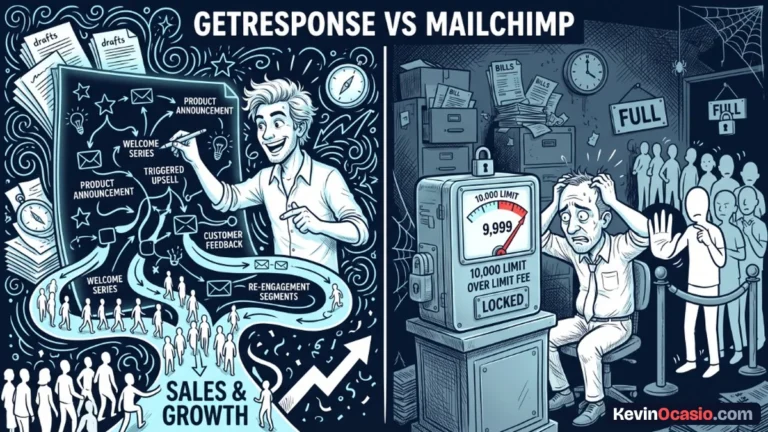
You sign up for an email tool at nineteen bucks a month. Then your subscriber list takes off. Soon you hit a hidden contact cap. Your monthly bill doubles before you know it.
The Short Version
- Start on the Starter plan at nineteen dollars a month if you just need newsletters, basic signup forms, and a simple automated welcome series.
- Upgrade to the Marketer plan only when you need unlimited visual automation workflows, abandoned cart recovery, or advanced tag-based triggers.
- Prune cold contacts monthly to keep your subscriber count inside lower pricing brackets instead of paying for abandoned inboxes.
Jump to Section
- The Base Pricing Floor: What the Starter Plan Covers
- How GetResponse Pricing Scales Across Subscriber Tiers
- The Feature Upgrade Triggers: When You Need the Marketer Plan
- Keeping Bills Down: Pruning Cold Subscribers and Annual Billing
- Picking Your Exact Plan: The Straightforward Verdict
- Lock In Your Plan and Keep Your List Clean
- Frequently Asked Questions About GetResponse Pricing
The Base Pricing Floor: What the Starter Plan Covers
You’ll usually see an email platform put its lowest price on the front page to win new signups. With GetResponse, that entry point is the Starter plan. It costs nineteen dollars a month for up to one thousand contacts.
For that nineteen dollars, you get unlimited monthly email sends, simple drag-and-drop newsletter builders, and basic landing pages. You also get signup forms and autoresponders. These tools let you send scheduled emails to new leads as soon as they sign up.
Automation is where you hit the first real fence. You only get one custom workflow on the Starter tier. That means you can build a single visual tree with tags and delays. If your business model relies on a simple welcome series that delivers a download and pitches a product, that single workflow does the job.
My GetResponse review breaks down how this basic tier holds up for everyday email campaigns. You don’t need a heavy marketing suite when a straightforward welcome sequence makes sales.
How GetResponse Pricing Scales Across Subscriber Tiers
Understanding how GetResponse pricing scales across your list is where you save real money. Like most tools, GetResponse charges you for every contact stored in your account. That means your monthly cost scales as you collect more email addresses.
When your list passes one thousand names, your bill goes up automatically. At twenty-five hundred contacts, the Starter plan moves to twenty-nine dollars a month. At five thousand contacts, it climbs to fifty-four dollars. Once you hit ten thousand contacts, you pay seventy-nine dollars a month.
Here is the full price breakdown comparing monthly bills against the annual plan discount across common contact tiers.
| Subscriber Tier | Starter (Monthly) | Starter (Billed Annually) | Marketer (Monthly) | Marketer (Billed Annually) |
|---|---|---|---|---|
| 1,000 Contacts | $19/mo | $15.58/mo ($187/yr) | $59/mo | $48.38/mo ($580/yr) |
| 2,500 Contacts | $29/mo | $23.78/mo ($285/yr) | $69/mo | $56.58/mo ($679/yr) |
| 5,000 Contacts | $54/mo | $44.28/mo ($531/yr) | $95/mo | $77.90/mo ($935/yr) |
| 10,000 Contacts | $79/mo | $64.78/mo ($777/yr) | $114/mo | $93.48/mo ($1,122/yr) |
If you want to run the exact math for your current subscriber count, test your numbers in the interactive tool below.
Email Platform Cost Calculator
See how much cash you keep in your bank each year by picking the right email autoresponder instead of paying overpriced subscriber bills.
The Feature Upgrade Triggers: When You Need the Marketer Plan
Your subscriber count isn’t the only thing that drives up your monthly bill. You can also trigger higher monthly bills when you need advanced marketing tools. This is where you jump tiers faster than expected.
The Marketer plan starts at fifty-nine dollars a month for one thousand names. That’s triple the Starter rate right out of the gate. But that price jump buys you unlimited visual automation workflows, event-based triggers, and abandoned cart sequences.
These advanced tools make sense if you run a busy digital store. Being able to tag buyers who clicked a link, split test sales emails, and recover lost carts pays for the fifty-nine dollar bill fast.
Knowing where to spend money in an online business keeps your bills low early on. If you don’t sell lots of items yet, stay on the basic plan with GetResponse until your traffic justifies the extra tools.
Keeping Bills Down: Pruning Cold Subscribers and Annual Billing
Paying for dead contacts is the quickest way to waste cash on email marketing. Every list loses subscribers over time. People abandon old inboxes, switch jobs, or stop opening your notes.
Sending messages to inactive email subscribers damages your sender reputation and pushes your account into pricey tiers. If you have eight thousand contacts but three thousand never open an email, you pay the seventy-nine dollar tier instead of the fifty-four dollar rate.
Set up a simple rule to find cold leads by tagging people who show zero activity over ninety days. Send them a quick note asking if they still want your updates. If they don’t reply, delete them from your list. A clean list keeps your bill low and helps your emails land in the main inbox.
Beyond cleaning your list, paying annually cuts your bill by eighteen percent across the board. Cutting your monthly software bills as a solopreneur means dropping dead weight before your card gets billed.
Picking Your Exact Plan: The Straightforward Verdict
Picking a plan is simple when you focus on what you need today. You pay too much if you buy tools for features you won’t use for months. Match your plan to your current daily setup.
For a basic blog or newsletter, pick the Starter plan. It handles your signup forms, sends your weekly broadcasts, and runs your welcome series without extra fees.
If you sell multiple downloads, you need the Marketer plan. It gives you the tagging and visual automation tools you need to follow up with buyers and boost sales.
Skip the Creator plan unless you want to host courses inside your email tool. That tier starts at sixty-nine dollars a month. Hosting courses on WordPress gives you better control over your digital assets.
Lock In Your Plan and Keep Your List Clean
Take five minutes today to audit your current contact count. Look at your real numbers and pick the plan that fits your business stage right now. Starting lean gives you room to grow without software bills eating your profit.
Sign up for the tier that solves your immediate problem today. Set a calendar reminder to clean your list every month. Switch to annual billing once your core email sequence brings in steady cash.
Frequently Asked Questions About GetResponse Pricing
Does GetResponse still offer a free plan?
You can test paid plans with a 30-day free trial. The old 500-contact free plan has been discontinued for new signups.
What happens if I go over my contact limit during the billing month?
The system automatically moves you to the next tier based on your peak contact count. Your account stays active, and your next invoice reflects the new list size.
Does GetResponse charge for unsubscribed contacts?
No, GetResponse only counts active leads toward your plan limits. Unlike Mailchimp, it doesn’t charge you for people who unsubscribe.
How much money do I save by paying annually?
Paying for a full year saves you 18% on your bill. That drops the Starter plan to fifteen dollars and fifty-eight cents a month, saving you forty-one dollars a year.
Can I downgrade my plan if my subscriber count drops?
Yes, you can drop down to a cheaper tier when you delete cold leads. The lower price takes effect on your next scheduled billing date.
Which plan is best if I only send a weekly newsletter?
The Starter plan is best for weekly newsletters. It gives you unlimited sends and simple signup forms without forcing you to pay for advanced tools.