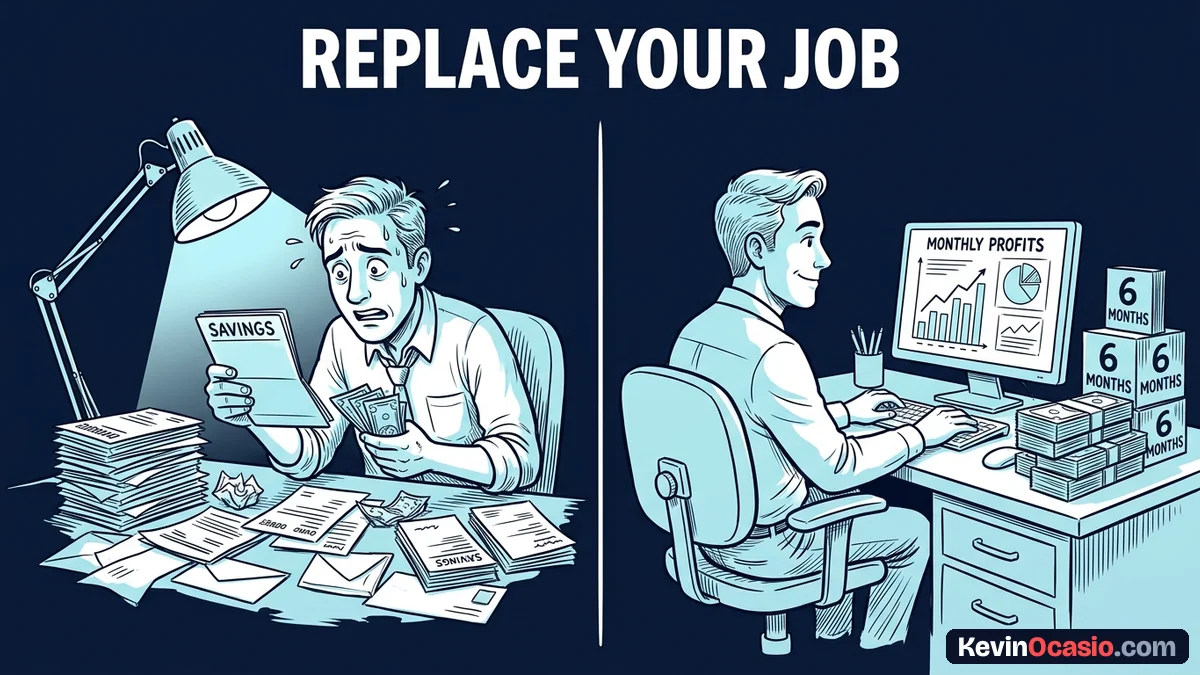
You make two thousand dollars from your side project in November. Your first urge is to quit your day job on Monday morning. That sudden jump can turn into a bad trap if your income can’t cover real bills.
The Short Version
- Cover your real monthly bills by proving your project pays for rent, food, and utilities for six straight months.
- Stack a six-month cash buffer in a separate business bank account to handle slow sales seasons and client delays.
- Live on side income today while saving your entire day job paycheck for ninety days to confirm you are truly ready.
Jump to Section
Is Your Side Hustle Ready to Replace Day Job Paychecks for Good?
It’s easy to look at gross sales and trick yourself into thinking you’re ready to quit. Seeing five thousand dollars hit your screen feels great. That money doesn’t belong to you yet. A regular job takes out taxes before you ever see your paycheck.
Working for yourself changes your taxes completely. You must pay the full 15.3% self-employment tax for Social Security and Medicare. On top of that, you still owe normal income taxes. That means you should set aside thirty cents of every dollar you make.
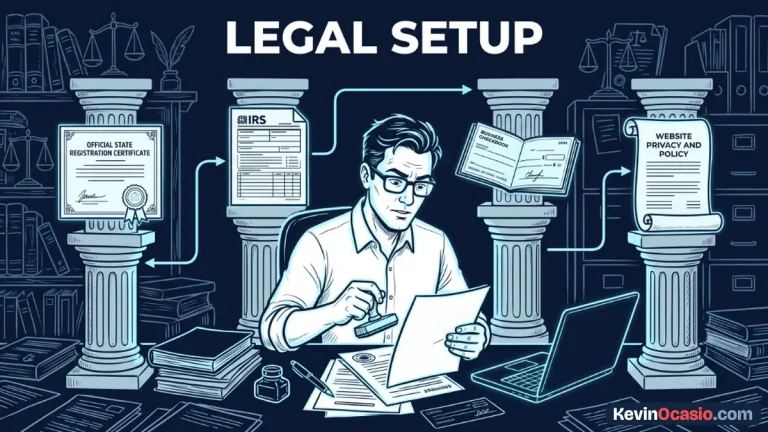
Skipping your payments leads to steep quarterly estimated tax penalties from the IRS. Those fines eat up your profit fast. Park your tax cash in a separate account right away so you never spend it.
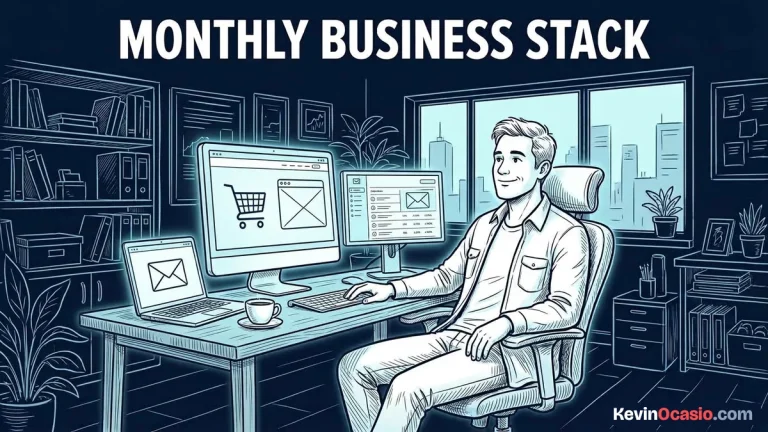
You also have to pay for your domains, web hosting, and software tools from that cash. Looking at where to spend money in an online business helps you spot waste early. Keeping your tool bills low protects your cash flow before you leave your job.
The Hidden Bills Your Paycheck Used to Cover Behind the Scenes
A company job pays for a lot of things you take for granted. Your boss pays half of your payroll taxes. The company also pays part of your health care plan and gives you paid time off. All of those perks disappear the moment you turn in your badge.
Buying your own health plan on the open market costs around six hundred dollars each month for basic coverage. If you get sick or need a break, you have zero paid days off. Your income stops if your business can’t run on its own while you rest.
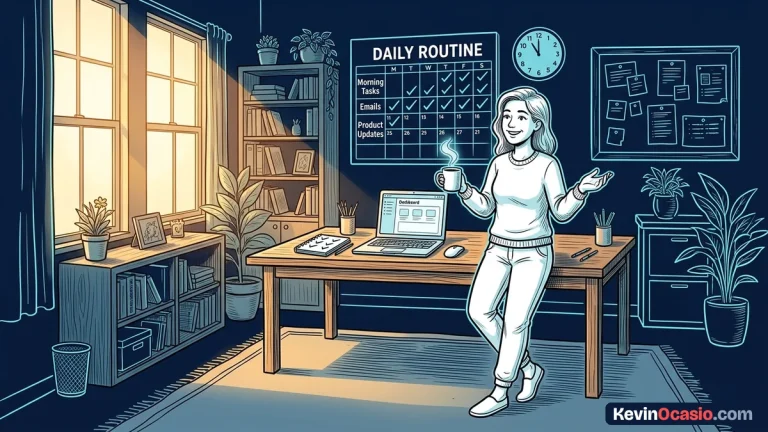
You might think quitting your job gives you forty free hours each week to work on your business. Empty days can lead to wasted time if you don’t have a clear daily plan. Learning how to work forty hours a week as a solo builder keeps you on track so you focus on tasks that make money.
The Six Month Survival Buffer That Keeps You from Panicking
One hot month doesn’t mean you have a solid business. Anyone can get lucky with a holiday launch or land one big client. A real business keeps paying its bills during slow summer months when buyers go away.
Aim for six months in a row where net profits cover your basic home budget. If your rent, food, car, and power bills cost three thousand dollars, your business must clear that much every month. A slow month shouldn’t force you to swipe credit cards to buy food.
You also need a dedicated cash cushion in a bank account before you walk away. Save six to twelve months of basic living costs so you can breathe when sales slow down. When you start a one-person online business, having cash in the bank keeps you from making desperate moves just to pay the rent.
This simple breakdown shows how the numbers change once you leave a company job to work for yourself.
| Financial Factor | Company Job Reality | Solo Business Reality |
|---|---|---|
| Taxes on Earnings | Employer pays half of payroll tax | You pay the full 15.3% self-employment tax |
| Health Insurance | Subsidized company group plan | Full individual policy ($500 to $700 every month) |
| Income Predictability | Fixed paycheck every two weeks | Variable monthly income with seasonal swings |
| Time Off and Sick Days | Paid vacation and sick time | Zero pay when you step away from the desk |
| Recommended Cash Buffer | Three months of living expenses | Six to twelve months of complete living costs |
Test Your Runway Before You Hand in Your Notice
The best way to know you’re ready is to run a ninety-day trial while you still have your job. For three straight months, live only on the profit from your side hustle. Pay your rent, buy your food, and cover your bills using only that money.
Take your regular paycheck and put all of it straight into your savings account. Don’t spend a single dime of that work money. If you can’t get by on your side income while your steady check keeps coming in, you aren’t ready to quit yet.
Passing this test gives you two big wins. It builds up your savings buffer very fast, and it proves your business can support you. Once you get through ninety days with zero money panic, handing in your notice feels easy, safe, and fully earned.
Frequently Asked Questions About Leaving Your Day Job
How much money should I save before quitting my day job for a side hustle?
You should save six to twelve months of basic living costs in a separate account before leaving your job. This cash cushion covers slow sales and surprise bills without forcing you into debt.
How many months of side hustle income do I need to prove stability?
Aim for at least six straight months of net profit that covers your monthly home budget. A single spike during a holiday launch doesn’t prove your business can survive all year long.
How do self-employment taxes affect my take-home pay?
Self-employed workers pay a 15.3% tax for Social Security and Medicare on top of regular income taxes. Set aside twenty-five to thirty percent of your profit so you avoid big tax surprises.
Should I quit my job if my side hustle matches my gross salary?
No, because gross sales don’t account for software costs, health care, or business taxes. Your net take-home profit after all bills and taxes must cover your living costs before you leave.
What is the biggest mistake people make when leaving their job for a side business?
The most common mistake is quitting after one good sales month without a cash buffer. When sales dip, running out of money causes panic and forces people back into job interviews.