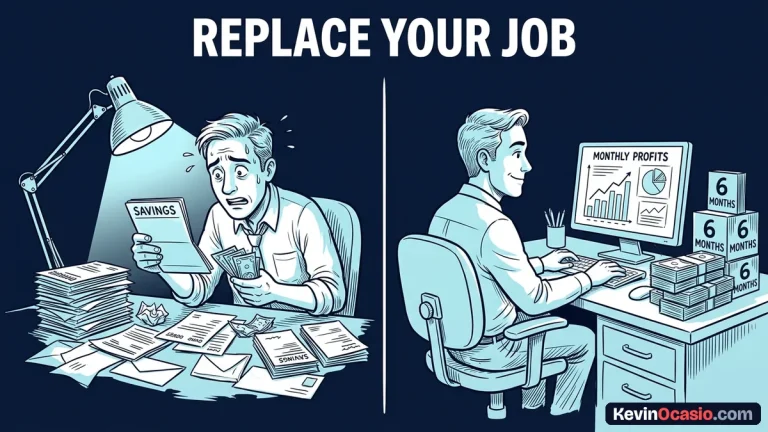
You sit down with coffee at eight, open four browser tabs, and suddenly it’s two with nothing done.
The Short Version
- Lock your morning hours for creating and publishing assets before opening your email or chat apps.
- Split your workday cleanly into maker blocks for creation and manager blocks for daily chores.
- Write tomorrow’s single target on a sticky note every evening to stop decision fatigue at your desk.
Jump to Section
- The Morning Trap of Reactive Busywork
- Build a Daily Routine for Online Business Around Maker Blocks
- The Asset-First Rule: Shipping Before Noon
- Reactive Busywork vs Asset-Driven Workdays
- The Evening Shutdown That Protects Tomorrow
- Protect Your First Two Hours Tomorrow
- Frequently Asked Questions About Online Business Daily Routines
The Morning Trap of Reactive Busywork
Checking your inbox and stats right after you wake up feels like real work. It’s actually a trap. When you read other people’s messages first, they take over your day. You spend your morning putting out small fires and clearing alerts while your own business sits still.
When you answer an email and then try to write, your focus freezes. It takes over twenty minutes to get back in the zone after one break. Even if you only read a quick note, your mind keeps chewing on it. You end up staring at a blank screen.
Every interruption creates mental carryover from task switching, where your brain stays glued to the last message. That leftover clutter slows down your writing. By noon, you feel wiped out from jumping between tabs. Yet your site hasn’t gained a single new lead or sale.
Build a Daily Routine for Online Business Around Maker Blocks
If you feel stuck, you’re probably trying to mix creative work and small chores all day long. You write two lines, check sales, tweak a graphic, and pay a bill. Switching gears every ten minutes drains your mind fast. You end up tired before lunch even starts.
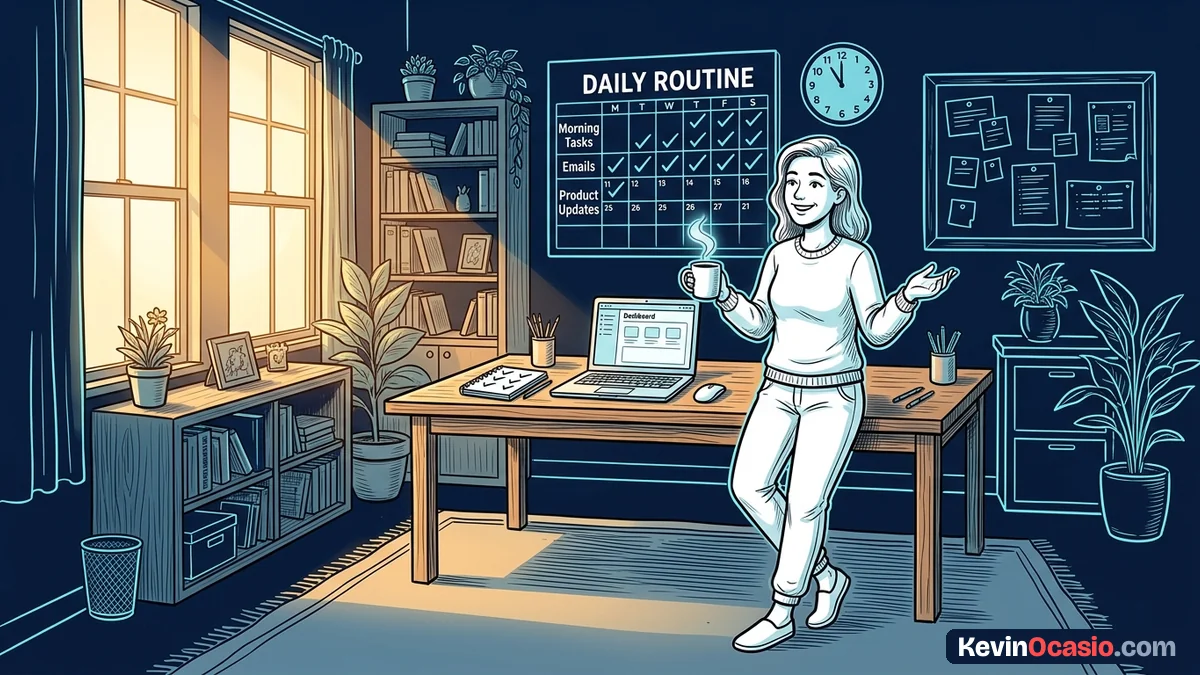
Splitting your day into two clean shifts solves this right away. The morning is your maker shift. You shut your inbox, mute your phone, and spend three quiet hours making new assets. The afternoon is your manager shift, where you answer emails and fix tech bugs.
This setup is key when starting a one-person online business since you have no staff to help you. If you let chores eat up your early hours, you’ll run out of steam. Give yourself permission to ignore your inbox until one o’clock. Your actual output will jump.
The Asset-First Rule: Shipping Before Noon
Every morning needs one clear goal that builds a lasting asset. A real asset keeps working for you long after you clock out. That means writing a blog post, building a signup page, sending an email, or making a product guide.
Good assets stay online and bring you leads twenty-four hours a day. Busywork just vanishes as soon as you finish it. Tidying your folders or changing font colors might feel useful, but it won’t put money in the bank. If a task doesn’t build an asset, push it to the afternoon.
Waiting until late in the day to start your big task rarely works. Your willpower drains with every small choice you make from morning to night. By late afternoon, your brain just wants to rest, and you end up watching videos instead. When you ship your asset before lunch, you win the day early.
Reactive Busywork vs Asset-Driven Workdays
Looking closely at how you spend each hour shows why busy days often lead to zero progress.
| Daily Element | Reactive Busywork Routine | Asset-Driven Maker Routine |
|---|---|---|
| Morning Focus | Checking inbox, social feeds, and stats | Deep work on one permanent asset |
| Work Blocks | Broken 15-minute bursts between pings | Solid 2 to 3 hour focus session |
| Email & Admin | Answered all day as alerts pop up | Batched into one afternoon block |
| Daily Deliverable | Inbox cleared, zero assets shipped | One published post, email, or page |
| Weekly Growth | Flat traffic, no new assets online | Five permanent assets working for you |
| Day-End Feeling | Drained, stressed, and behind schedule | Calm, proud, and ready for tomorrow |
If you get caught in the reactive trap, you work long hours while your site never grows because nothing new goes live. When you spend two quiet hours shipping an asset each morning, you finish the month with twenty new pieces of digital property. That steady work builds real traffic and sales over time.
The Evening Shutdown That Protects Tomorrow
Stopping your day with a clear shutdown routine keeps work stress from following you home. If you don’t have a firm stopping point, your mind keeps spinning over open tasks all evening. That worry ruins your sleep and leaves you waking up tired.
Write your single main asset task for tomorrow on a paper note before you close your laptop. When you sit down the next morning, you won’t waste time guessing what to do or opening your inbox for clues. Your goal is set, your desk is clear, and you can jump right in.
Walking away at a set time is also the trick to capping your workweek at 40 hours without falling behind. Work always stretches to fill whatever time you give it. When you set a hard stop at five, you cut out timewasters and treat your morning hours with care.
Protect Your First Two Hours Tomorrow
Real change starts by treating your morning focus as your top business asset. You don’t need a wild routine with cold baths, guided apps, and two hours of reading before you can begin. All you need is the grit to keep your inbox shut and your phone in another room.
Tomorrow morning, leave your browser closed until you open a blank doc and start your maker block. Spend your first ninety minutes writing a post, an email, or a short lesson. Once that asset is live, open your inbox and handle your admin chores with an easy mind.
Frequently Asked Questions About Online Business Daily Routines
What if a buyer has a problem during my morning maker block?
Unless your site crashed or checkout is broken, few support questions need an answer in two hours. An auto-reply that says you answer mail twice a day sets clear bounds while keeping your focus safe.
How long should my morning maker block last?
Two to three hours is ideal for most people. Trying to push past four hours of deep creative work often leads to tired eyes and slow output.
Can I check my sales numbers in the morning?
Looking at stats first thing brings a rush of emotion that pulls your head out of creative mode. Check your stats once in the afternoon so poor numbers don’t spoil your morning flow.
What if I work a day job and only have two hours?
Put all two hours into making assets like articles or emails, and save admin chores for the weekend. When your time is short, every minute must build things that can earn money later.
How do I stop checking distracting websites?
Use a free site blocker tool to shut off news and social feeds until noon. Putting a simple roadblock between your fingers and distracting sites gives your focus the boost it needs.
Should my daily routine stay the same on weekends?
Taking one or two full days off each week is necessary to reset your brain and stay sharp. Working seven days straight with no rest leads to poor work and burnout.
What should I do if an emergency breaks my morning flow?
Handle the urgent issue without guilt, then set a fresh focus block for later or the next morning. Your routine is a tool to help you work, not a rigid set of rules that falls apart at the first bump.