You want to sell goods or services on the web, but legal forms make you freeze up. Many beginners think they must pay two grand to a law firm just to start out right. That’s a costly myth that keeps people from ever launching.
The Short Version
- File directly with your state through the official portal to skip high middleman fees.
- Get a free tax ID online from the IRS in ten minutes without paying filing firms.
- Separate your bank accounts completely to protect your personal cash and keep your legal shield safe.
Jump to Section
- How to Set Up Online Business Legally on Your Own
- Registering a Simple LLC Directly with Your State
- Claim Your Free IRS Tax ID and Wall Off Your Bank Accounts
- The Basic Website Policies You Need to Publish
- Take Care of Your Legal Foundation This Afternoon
- Frequently Asked Questions About Setting Up an Online Business Legally
How to Set Up Online Business Legally on Your Own
Legal rules sound scary because lawyers speak in thick jargon. Law firms charge three hundred bucks an hour to fill out basic lines that ask for your name and address. If you run a lean web business from a desk, your legal setup is very simple.
Big law firms want you to think that every new shop needs huge deals and thick books of rules. In truth, a solo web business has no shop leases, big trucks, or staff on payroll. You don’t face the big risks of a retail shop with shoppers walking on slick floors.
Giving a lawyer thousands of bucks before you make your first dollar wastes cash you need for real growth. When you look at where to spend money in an online business, big legal fees sit at the bottom of the list. You can knock out your whole setup in one day on state web pages.
Registering a Simple LLC Directly with Your State
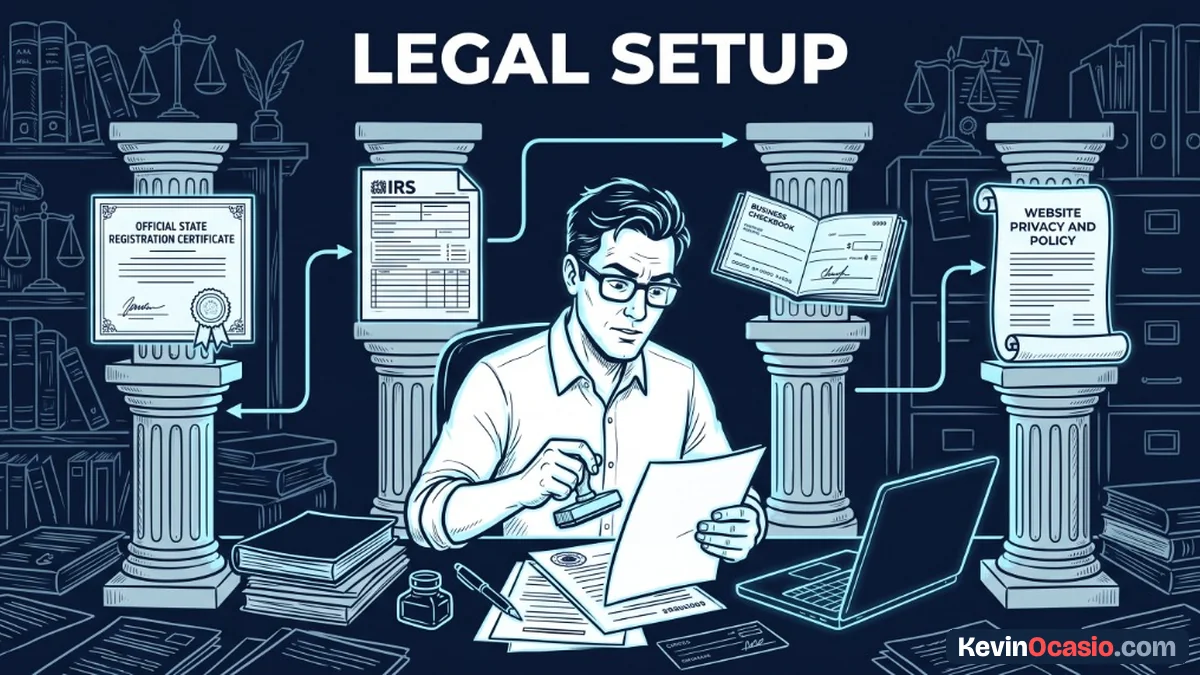
An LLC gives you a legal wall that keeps your home and savings safe from business debts. If someone sues your shop or a debt collector calls, an LLC shields your personal bank funds. A sole proprietorship gives you zero cover, which puts your life savings at risk.
Skip filing websites that charge three hundred bucks for packages you don’t need. Go right to your home state business portal. Search for the form to file Articles of Organization for a domestic LLC.
The state form asks for your company name, your line of work, and who takes your legal mail. You can write a broad line of work like any lawful trade so you can sell new things later. Most states approve these forms in three to five days for a fee between forty and five hundred bucks.
If you’re a military veteran, check your state site before paying a dime. States like Texas, Missouri, and Pennsylvania waive filing fees for veteran-owned businesses. Texas also waives five years of franchise tax once you verify your discharge papers.
You must also name an agent to take legal notices. You can list yourself and your home address for zero cost if you don’t mind having it in public view. If you want privacy, you can hire a private mail agent for fifty to one hundred bucks a year.
Claim Your Free IRS Tax ID and Wall Off Your Bank Accounts
Once your state approves your LLC papers, you need a federal tax ID. It acts like a Social Security number for your business. It lets you take client cash and work with card processors without giving out your personal ID. You can apply on the IRS site and get it in ten minutes for zero cash.
Private filing services often charge eighty bucks or more to click through this same free form for you. There’s no reason to pay a fee for an EIN because the government portal gives it to you for free right away. Save that IRS tax letter as a PDF because your bank needs it to set up your account.
Take your state papers and your tax ID letter to a bank to open a dedicated business checking account. Running customer sales or tool bills through your personal account destroys your legal defense. Courts call this piercing the corporate veil, which strips away your personal legal shield when you mix funds.
Pay all company bills with your business card and put every sale into that account. When you want to pay yourself, move cash from your company checking to your home account as an owner draw. Keeping this clean line proves your company is completely separate from your personal life.
The Basic Website Policies You Need to Publish
If you collect emails or sell digital files, you need clear terms in your footer. Web privacy laws say you must tell users what data you track and how you store it. Skipping these pages makes your site look shady and risks fines from government regulators.
You need three main pages in your site footer: a Privacy Policy, Terms of Use, and Disclaimers. Your Privacy Policy says that you collect emails, track visits, or take card sales through Stripe. Your Terms of Use lay out the rules for refunds, acceptable behavior, and how visitors can browse your site.
If you share tips or recommend tools, add an FTC note saying that you earn referral fees. When you start a one-person online business, simple policy tools or clean templates give you solid text for under twenty bucks. Paste these terms into WordPress pages and link them in your footer menu.
Here’s how the real costs compare when you handle the filing yourself versus hiring an outside firm.
| Setup Step | High-Priced Law Firm | Direct DIY Path |
|---|---|---|
| State LLC Filing | $800 to $2,500 (Lawyer retainer) | $40 to $500 (State fee only) |
| Federal Tax ID (EIN) | $75 to $150 (Filing markup) | $0 (Direct on IRS site) |
| Operating Agreement | $300 to $600 (Lawyer draft) | $0 (Basic member draft) |
| Site Legal Terms | $500 to $1,200 (Legal review) | $0 to $20 (Basic policy tool) |
| Total Startup Cost | $1,675 to $4,450 | $40 to $520 |
Take Care of Your Legal Foundation This Afternoon
Setting up your business legally doesn’t take weeks of hassle or piles of paperwork. You can wrap up the whole task this afternoon by taking one clear step at a time. Getting this done clears your head so you can sell with peace of mind.
Visit your state portal today to check your name and file your LLC forms. Once your state sends your approved papers, grab your free EIN on the IRS site and open your business bank account. Add your privacy and terms links to your footer, and your legal wall is set.
Put your work hours into helping buyers, making digital goods, and building your list. A clean, simple legal base keeps your assets safe while your monthly bills stay near zero.
Frequently Asked Questions About Setting Up an Online Business Legally
Do I need an LLC before I make my first dollar online?
You can test an idea on your own, but you should form an LLC once you sell items or take card payments. An LLC protects your personal cash from business debts and buyer claims.
Can I act as my own registered agent for my LLC?
Yes, you can act as your own agent if you’re eighteen and have a real street address in your state. If you want to keep your home address off public state lists, pay a mail agent fifty to one hundred bucks a year.
Do military veterans get LLC filing fees waived?
States like Texas, Missouri, and Pennsylvania waive LLC fees for honorably discharged veterans. You submit a state verification letter with your filing to skip the normal fee.
How much does it cost to get an EIN from the IRS?
An EIN is free on the official IRS web page. The web form takes ten minutes to finish and hands you your tax ID right after you click submit.
What happens if I use my personal bank account for my business?
Mixing personal and business cash breaks your legal shield in court. If someone sues, a judge can say your company isn’t its own entity and hold you personally liable for the debt.
Do I need a business license if I only sell digital products?
If you only sell digital products, you usually just need your state LLC and federal tax ID. Check your town or county clerk site to see if your city wants a basic home work permit or local tax receipt.