Most developers love big, complicated apps. They pick heavy cloud setups, three databases, and hundreds of code packages. But after years of building web tools, I know why simple software beats complex software every time. It comes down to one clear fact: complex code breaks, while simple code just works.
The Short Version
- Big setups waste your time and eat up most of your cash in endless bug fixes.
- Clean client code runs fast right in the web browser, cutting server bills and crash risks.
- Cutting extra packages protects you from supply chain bugs and keeps your tools running for years.
Jump to Section
- The Hidden Maintenance Debt of Complex Codebases
- Why Simple Software Beats Complex Software in Performance and Speed
- The Dependency Trap and Software Security Risks
- How to Build Lean Digital Assets That Last for Years
- Audit Your Codebase and Ruthlessly Cut the Dead Weight
- Frequently Asked Questions About Simple Software
The Hidden Maintenance Debt of Complex Codebases
Writing new code is the easy part. Keeping it running eats up fifty to eighty percent of your software budget. When you build with microservices, queues, and split databases, every single part needs constant care.
When something breaks at two in the morning, finding the bug hurts. You have to check logs across multiple servers. You must dig through deep code layers just to find one bad database query.
Simple software fixes this problem by keeping your code in one spot. A clean script or a basic self-hosted app lets you read the full code from top to bottom in five minutes. You don’t need to hire server experts. You won’t spend your weekend hunting ghost bugs.
Why Simple Software Beats Complex Software in Performance and Speed
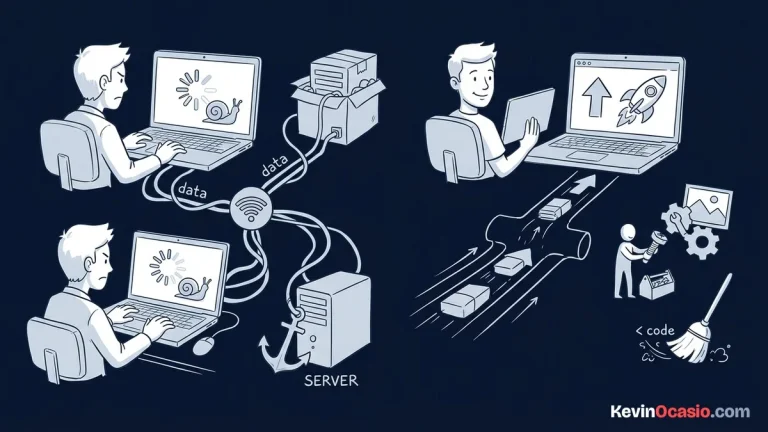
Every extra library slows down your site. Modern frontend frameworks ship megabytes of script files before a visitor can click a button. That heavy download forces the browser to work hard just to show basic text on the screen.
Slow load times hurt your sales and drive buyers away. When a page takes over three seconds to load, bounce rates jump by thirty percent. Mobile visitors on budget phones suffer most because their chips stall on heavy scripts.
This speed gap is another reason why simple software beats complex software on every test. A lean tool in plain HTML and vanilla JavaScript opens in under half a second. It uses almost zero device memory and gives your users an instant response.
The Dependency Trap and Software Security Risks
When you install a helper package, you get far more than one file. You pull in dozens of transitive software dependencies made by strangers. Most security bugs in modern apps hide deep inside these nested packages rather than your own code.
Every extra package is an open door for bad actors. If an outside coder drops a library or loses their password, hackers can slip bad code right into your live app.
You can protect your digital tools by writing plain code yourself. If a task takes twenty lines of plain JavaScript, write those twenty lines. You remove a big security risk. You never have to worry about a broken package killing your site.
How to Build Lean Digital Assets That Last for Years
Building simple tools takes a clear shift in how you think. Stop looking for new frameworks to try. Ask what is the least amount of code you need to solve the user’s problem.
Run your logic inside the user’s browser whenever you can. If you build a text tool, an image cropper, or a math utility, let the browser do the job. You don’t need a backend server or a database. Your hosting bill drops to almost nothing.
When you need a backend system, keep it basic. Running self-hosted WordPress on reliable web hosting gives you a solid setup without the stress of managing cloud clusters. Your tools stay fast. Your bills stay tiny, and your site stays online for years.
Here is how bloated over-engineered software compares to a clean, simple codebase across everyday operations:
| Software Attribute | Bloated Over-Engineered Stack | Clean Simple Architecture |
|---|---|---|
| Initial Setup & Dependencies | Hundreds of nested npm packages and cloud services | Vanilla JavaScript and standard HTML/PHP |
| Ongoing Maintenance Costs | 50% to 80% of project budget spent on constant fixes | Near-zero maintenance once the core tool is live |
| Average Page Load Speed | 3+ seconds with megabyte-sized script bundles | Under 500ms with instant client-side execution |
| Security Attack Surface | Dozens of unvetted third-party supply chain risks | Minimal attack surface with owned, isolated code |
Audit Your Codebase and Ruthlessly Cut the Dead Weight
Take a hard look at your software tools today. List every external library, plugin, and server tool you manage right now. Ask yourself if each item truly earns its spot or if it just slows you down.
If you spot heavy frameworks running simple features, swap them out for plain scripts. Delete unused packages from your build files. Turn complex setups into clean single-file tools.
This same lean rule applies to the monthly apps you buy. If you want to cut waste across your whole business, read my guide on how to stop paying for software you don’t need. Knowing why simple software beats complex software gives you the power to build lean digital assets that generate profit without running your life.
Frequently Asked Questions About Simple Software
Is simple software only good for basic web tools?
No, simple software works great for big apps too. Clean code with few packages handles heavy traffic while staying easy to update.
Why do developers over-engineer software in the first place?
Many coders chase new trends or want fancy tech on their resume. Business owners need stable tools that solve problems with low upkeep.
Does using fewer dependencies make development take longer?
Writing native code takes a little more time up front. But it saves you dozens of hours later by avoiding broken packages and security patches.
How does simple software improve page loading speed?
Simple software ships tiny native files instead of huge code bundles. Web browsers read the code instantly, which cuts bounce rates and lifts sales.
What is client-side processing and why does it matter?
Client-side processing runs tools right in the user’s web browser. This wipes out server bills, keeps user data private, and stops crashes during traffic spikes.
When is a complex architecture actually necessary?
Big setups are only needed by giant tech firms with hundreds of engineers. Solo builders move much faster with simple, direct systems.
How do I know if my codebase has too many dependencies?
If your build takes minutes to finish or throws security alerts, your project is bloated. A quick audit will show packages you can easily delete.
Can simple software scale as my traffic grows?
Yes, simple software scales easily because it uses very few server resources. Lean client tools can handle huge spikes in visitors without slowing down.